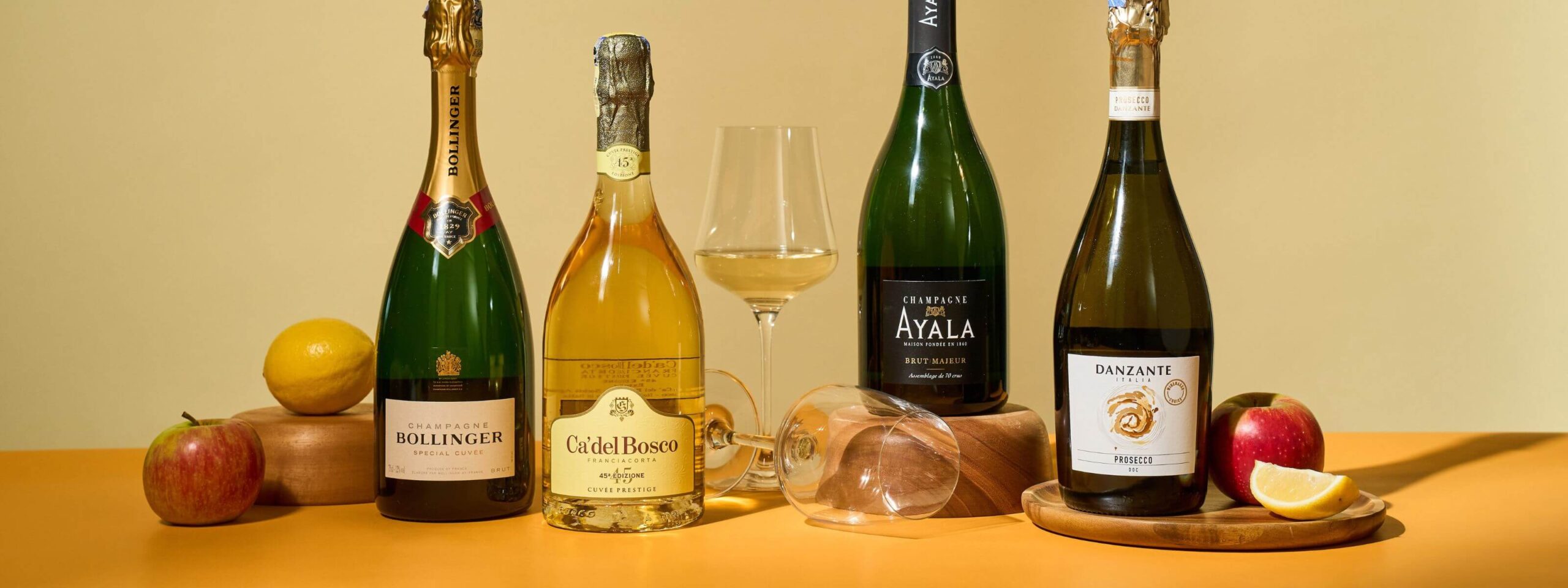
The sommelier’s hand hovered over three bottles, each promising effervescence but delivering vastly different experiences. The Champagne gleamed with golden elegance, the Cava wore its Spanish heritage proudly, and the Prosecco sparkled with Italian vivacity. What the wine novice couldn’t see was the centuries of tradition, varying production methods, and distinct terroir that separated these bubbling wines into entirely different categories.
The méthode champenoise distinction
Champagne stands alone not just because of geography, but because of process. The méthode champenoise creates bubbles through a secondary fermentation that happens inside the bottle itself. Yeast and sugar get added to still wine, then the bottle gets sealed. The trapped carbon dioxide has nowhere to go but into solution, creating those prized bubbles.
This method produces smaller, more persistent bubbles than other techniques. The wine sits on its lees for months or years, developing complex flavors that range from brioche to hazelnut. Only wines from the Champagne region of France can legally use this name, though other regions employ the same method under different labels. Crémant from Loire Valley or Burgundy follows identical production rules. So does Cava from Spain’s Penedès region.
Time investment explains the price point. Where machine-made sparkling wine takes weeks, traditional method wines require years. Each bottle gets riddled by hand or machine to consolidate the dead yeast, then disgorged to remove the sediment. Labor intensive. Quality shows.
Tank method efficiency
Most Prosecco takes a different path. The Charmat or tank method conducts secondary fermentation in large pressurized tanks rather than individual bottles.
Italian producers perfect this method for Prosecco because it matches the grape’s personality. Glera grapes offer delicate floral and pear notes that would get overwhelmed by extended lees contact. The tank method captures these characteristics while adding gentle effervescence. Results feel lighter and more approachable than traditional method wines.
Regional character matters
Geography shapes sparkling wine as much as production method. German Sekt often carries the mineral precision of Riesling, while Australian sparkling Shiraz brings red fruit intensity rarely found elsewhere. American sparkling wine regions like Anderson Valley produce wines that reflect their cool coastal climates through bright acidity and citrus notes.
Regional differences become apparent when you shop sparkling wine online and compare offerings from different countries. Each region’s climate, soil, and grape varieties create distinct flavor profiles that transcend production methods.
Sweetness levels and food pairing
Sparkling wine categories extend beyond geography and production to include sweetness levels that dramatically affect pairing potential. Brut Nature contains virtually no residual sugar, making it razor-sharp with oysters or sushi. Extra Brut adds just enough sweetness to soften harsh edges while maintaining food-friendly acidity.
Brut represents the most common style, with enough residual sugar to round out the wine without making it noticeably sweet. Demi-sec moves into dessert territory, though it works surprisingly well with spicy Asian cuisine where the sweetness balances heat. Many producers now experiment with dosage levels to create signature styles. Some Champagne houses add no dosage at all, letting the wine’s natural character shine through, while others use dosage strategically to build consistent house styles across vintages.
Emerging categories
Pet-nat, short for pétillant naturel, represents sparkling wine’s artisanal edge. This ancient technique bottles wine before primary fermentation completes, trapping carbon dioxide naturally. Results tend toward cloudy, funky, and intensely flavorful. Pet-nat appeals to natural wine enthusiasts who appreciate its unfiltered, unrefined character.
Rosé sparkling wines create another category worth understanding. Some get their color from brief skin contact with red grapes, while others blend red and white wines. The method affects both color intensity and flavor profile, with skin-contact versions typically showing more structure and tannin.
Understanding these distinctions transforms sparkling wine from a celebration-only category into a diverse world of possibilities. Each type fits different occasions, food pairings, and personal preferences. The key lies in matching the wine’s character to the moment, whether that calls for Champagne’s sophistication or Prosecco’s accessibility.