
Blog
The Dorm Bedding Mistakes Every First-Year Student Makes (and How to Skip Them)

Most dorm bedding disasters have nothing to do with style. They come down to fit, bulk, laundry logistics, and a room temperature that never behaves the same way twice. Every fall, students show up with sheets that are the wrong size, a comforter too heavy for the machines down the hall, or a bed that looked great online and felt miserable by the second humid night.
A smoother move-in comes down to solving those real-life problems first: Twin XL sizing, tight storage, shared laundry, and a room that runs hot in August and cold by November. Bedding brands like Warmy & Tummy build around exactly that gap — practical fit and materials that hold up, without giving up on comfort.
Mistake #1: Buying Regular Twin Instead of Twin XL
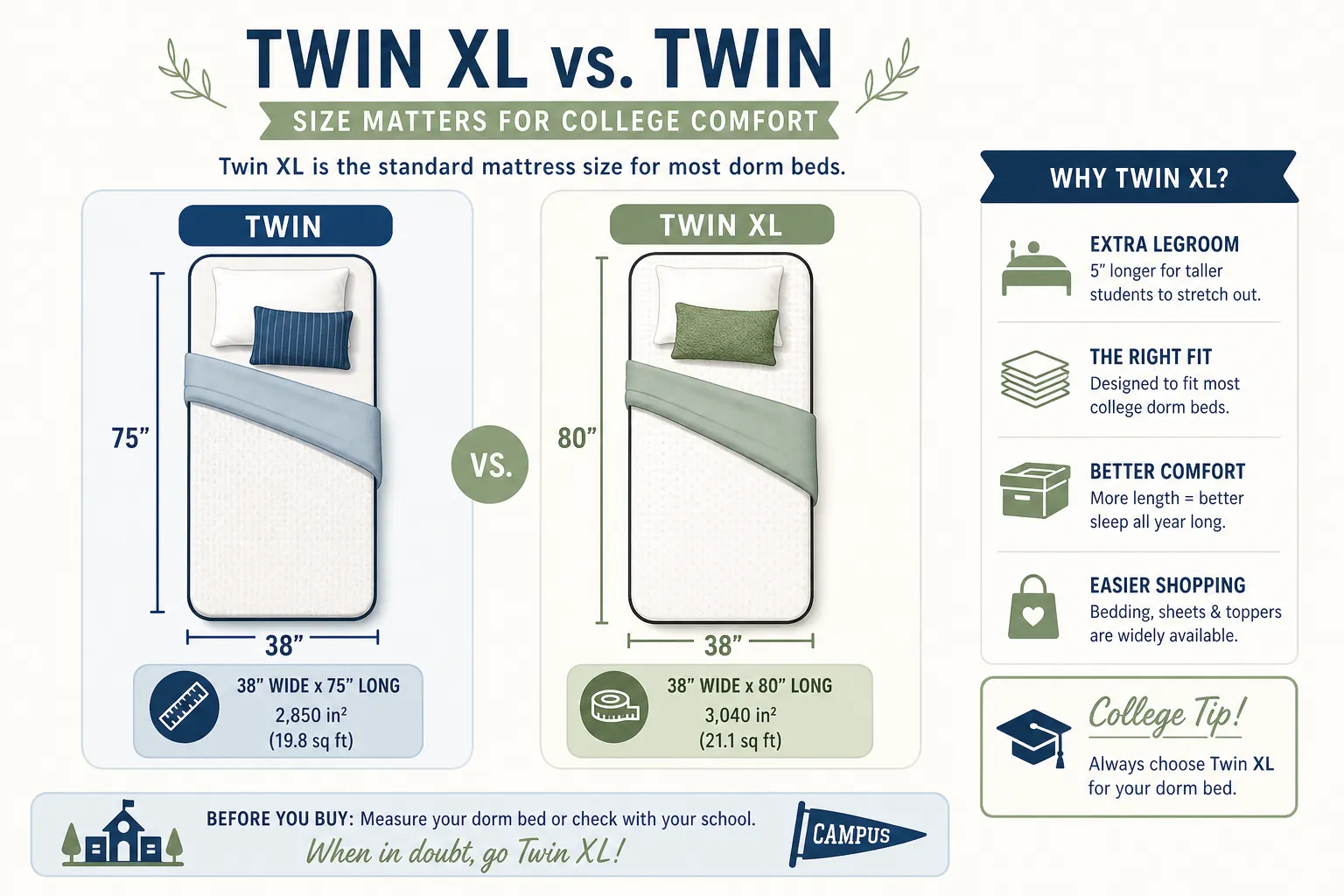
This is the most common — and most expensive — error. Most dorm mattresses are Twin XL, five inches longer than a standard twin, and that difference matters more than it sounds. Regular sheets slip off the corners, bunch overnight, and make an otherwise tidy bed look unfinished.
The fix: confirm the exact mattress size with housing before ordering anything, then build the base layer around it — two fitted sheets, a flat sheet if preferred, a properly sized comforter, and pillowcases. Getting this one detail right instantly makes the whole setup look and feel more put-together.
Mistake #2: Packing Only One Sheet Set
It sounds fine until the first busy week, when machines are full, someone forgets their load, and there’s no clean bedding left at 11 p.m. In a dorm, one sheet set is never actually enough — you need one on the bed and one in reserve for laundry day, spills, or getting sick.
Mistake #3: A Comforter That’s Too Bulky to Wash or Store
.png)
Plenty of students arrive with bedding that looked plush in a showroom but barely fits in a dorm washer and eats up all the under-bed storage. The better approach is a medium-weight comforter — warm enough for cooler months, breathable enough for early fall, and easy to fold, wash, and air out.
Warmth flexibility matters here more than people expect. Dorm temperatures swing by building, floor, and even roommate habits, so layering works better than one extreme choice: a breathable fitted sheet, a lightweight blanket, and a medium-weight comforter as the main layer. For students who run hot or move into a stuffy room, a lighter organic cotton comforter with adjustable warmth levels solves this without requiring a second purchase once the seasons change.
Mistake #4: Packing for Pinterest, Not for a Small Room
A beautifully styled bed is nice, but dorm rooms are tight, and decorative extras pile up fast. The edited version works better: one quality comforter, two sheet sets, two pillows, one throw, and a storage bin for whatever’s off-season. That’s comfort without turning the bed into a clutter problem.
Mistake #5: Ignoring Shared Laundry Reality
College laundry rooms are not gentle environments — rushed schedules, shared machines, and the occasional forgotten load. Bedding needs to survive that: solid stitching, fabric that holds up over repeated washing, and ideally a removable cover rather than one bulky all-in-one piece. Premium doesn’t have to mean fussy; well-made bedding often lasts longer precisely because it resists flattening and pilling.
Mistake #6: Forgetting the Small Stuff
The big items get all the attention, but daily comfort often comes down to the extras nobody thinks about until move-in day: a mattress protector, pillow protectors, a lightweight throw, and a small laundry bag just for sheets and towels. None of it is glamorous, but it makes the routine easier.
Mistake #7: Parents Overbuying or Underbuying
Some families order an oversized bundle full of things that never get used. Others under-pack and end up placing a panicked order during move-in week. A simple priority list avoids both:
Core essentials: Twin XL fitted sheets (x2), a flat sheet, pillowcases, a mattress protector, and a medium-weight comforter or duvet.
Nice-to-haves: a light blanket, one throw, a bedside caddy for lofted beds, and a storage bin.
The Smarter Strategy
Most mass-market dorm bundles compete on price and color, not on sleep quality — but bedding affects temperature regulation and how rested a student actually feels during a demanding transition. Fewer, better pieces beat a cheap bundle almost every time: two real sheet sets instead of one thin set, a season-appropriate comforter instead of a generic puffy one, and breathable materials that still look elevated.
If you’re building that setup rather than assembling it piece by piece, it’s worth starting from a full collection of dorm-ready bedding organized by warmth level and material, so sizing and season are handled before anything goes in the cart.
The smartest back-to-school bedding isn’t the cutest one on move-in day — it’s the one that’s still working after finals, three loads of laundry, and a semester of temperature swings.
A Practical Sequence for New-Construction Yard Preparation
Tile vs Vinyl Flooring vs Hardwood Flooring: Which Is Better?
Helpful Home Maintenance Resources Every Homeowner Should Know About
7 Home Improvements Worth Making Before You Sell — and What to Skip
Kitchen Remodel Mistakes That Could Cost You Thousands
عقد صيانة أدوات مكافحة الحريق وشهادات السلامة والتقارير الفنية الهندسية
Little-Known Myths in Miami: Pirates, Ghosts, Treasure, and Strange South Florida Legends
Simple Ways to Make Your Computer Skills More Useful
Top 10 Immersion Silver PCB Manufacturers in 2026
